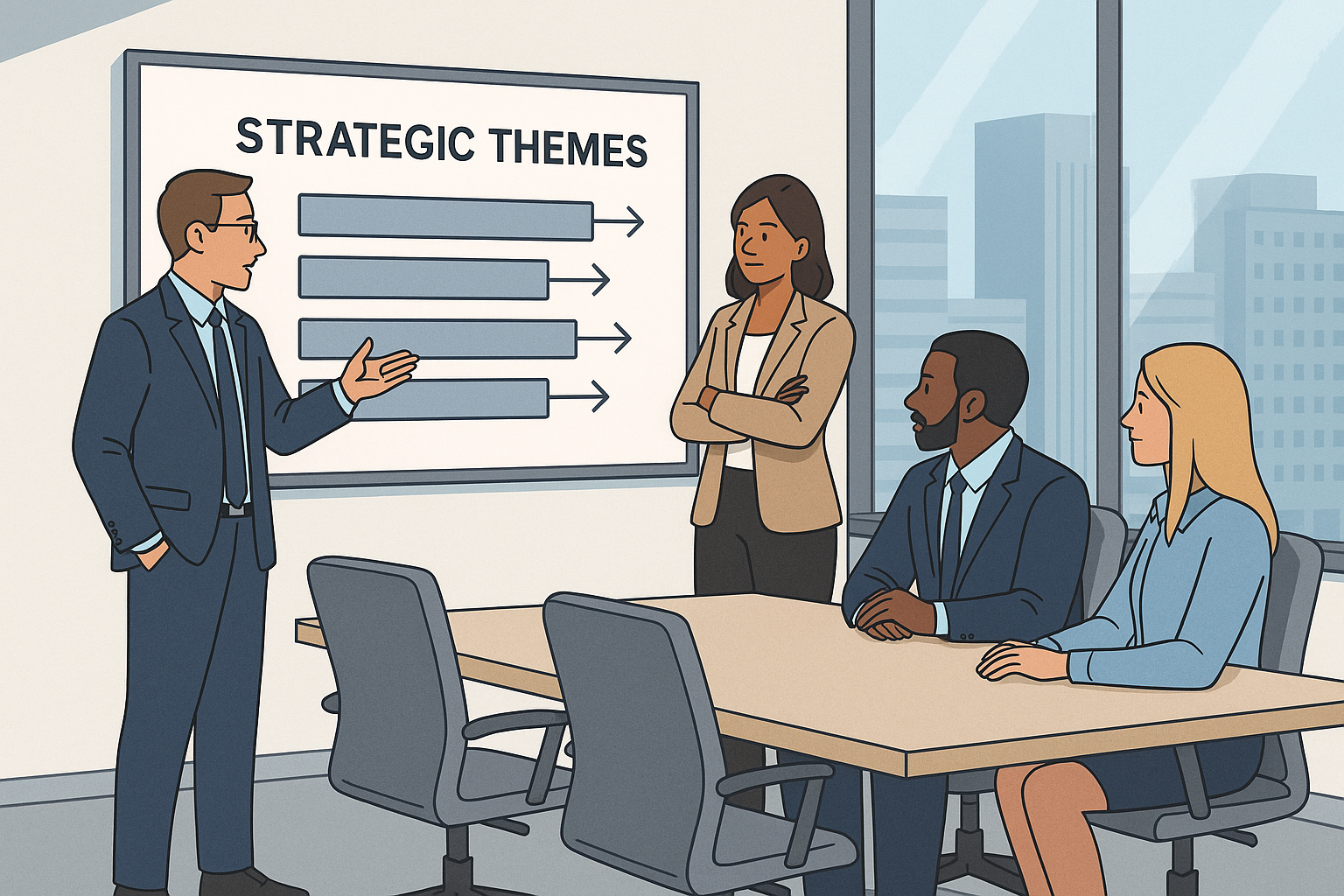
Strategic Themes in SAFe: The Key to Portfolio Alignment and Agile Execution
Nov 5, 2025
What Are Strategic Themes in SAFe?
They articulate the business objectives that guide decision-making across SAFe portfolios.
Strategic Themes provide a set of high-level, time-bound goals used to drive investment decisions, inform Portfolio Epics, and inspire Agile Release Trains (ARTs) as they define and deliver value. Unlike tactical plans, Strategic Themes are visionary yet measurable, offering just enough structure to ensure that portfolio-level alignment doesn’t drift into siloed chaos.
Aligning Portfolio Vision with Agile Execution
Strategic Themes help leaders avoid the age-old trap of “the teams are busy, but we’re not moving the needle.”
When properly defined, they cascade the organizational strategy directly into Lean Portfolio Management (LPM) practices—ensuring that Agile teams are building the right things, not just building things right. Themes align with value streams and help prioritize Epics in the Portfolio Kanban, guiding where money and talent should go.
Making Strategic Themes Actionable
Good themes reflect market conditions, customer needs, and enterprise aspirations.
They’re typically created during annual or semi-annual strategic planning sessions and supported by data, customer feedback, and stakeholder input. In practice, they show up on Portfolio Kanban boards, influence PI Objectives, and provide a compass for Enterprise Architects and Epic Owners as they shape solutions.
To be actionable, a Strategic Theme should:
-
Reflect a compelling, enterprise-wide goal
-
Be tied to measurable KPIs or OKRs
-
Align with budgeting and capacity allocation
-
Inspire but not micromanage Agile teams
Strategic Themes and Lean Portfolio Management
Through LPM, Strategic Themes get translated into investment funding decisions, Agile portfolio operations, and governance.
In participatory budgeting sessions, stakeholders use Strategic Themes to evaluate which Epics are worth funding based on alignment and potential business value. In short, if your themes aren’t shaping investment decisions, they’re not strategic—they’re decorative.
Evolving Themes with the Business
Business agility means adapting strategy in real-time.
Strategic Themes should be revisited every 6 to 12 months as part of the portfolio review cycle. If your Agile teams are aligned with outdated themes, they’ll keep delivering incrementally on goals that no longer matter. Transparency and feedback loops—including Lean metrics—are essential for understanding when a pivot is necessary.
How Bush Agility Can Help
Our training, coaching, and staff augmentation services ensure that your LPM practice doesn’t just exist—it thrives.
Whether you’re launching Agile Release Trains, conducting participatory budgeting, or scaling value delivery across your enterprise, we’ll help you move from strategy to measurable success.
👉 Contact Bush Agility today to align your Agile execution with your business strategy.