Ceremonies vs. Events: Why Words Shape Agile Mindsets
Oct 1, 2025
Words Shape Mindsets in Agile
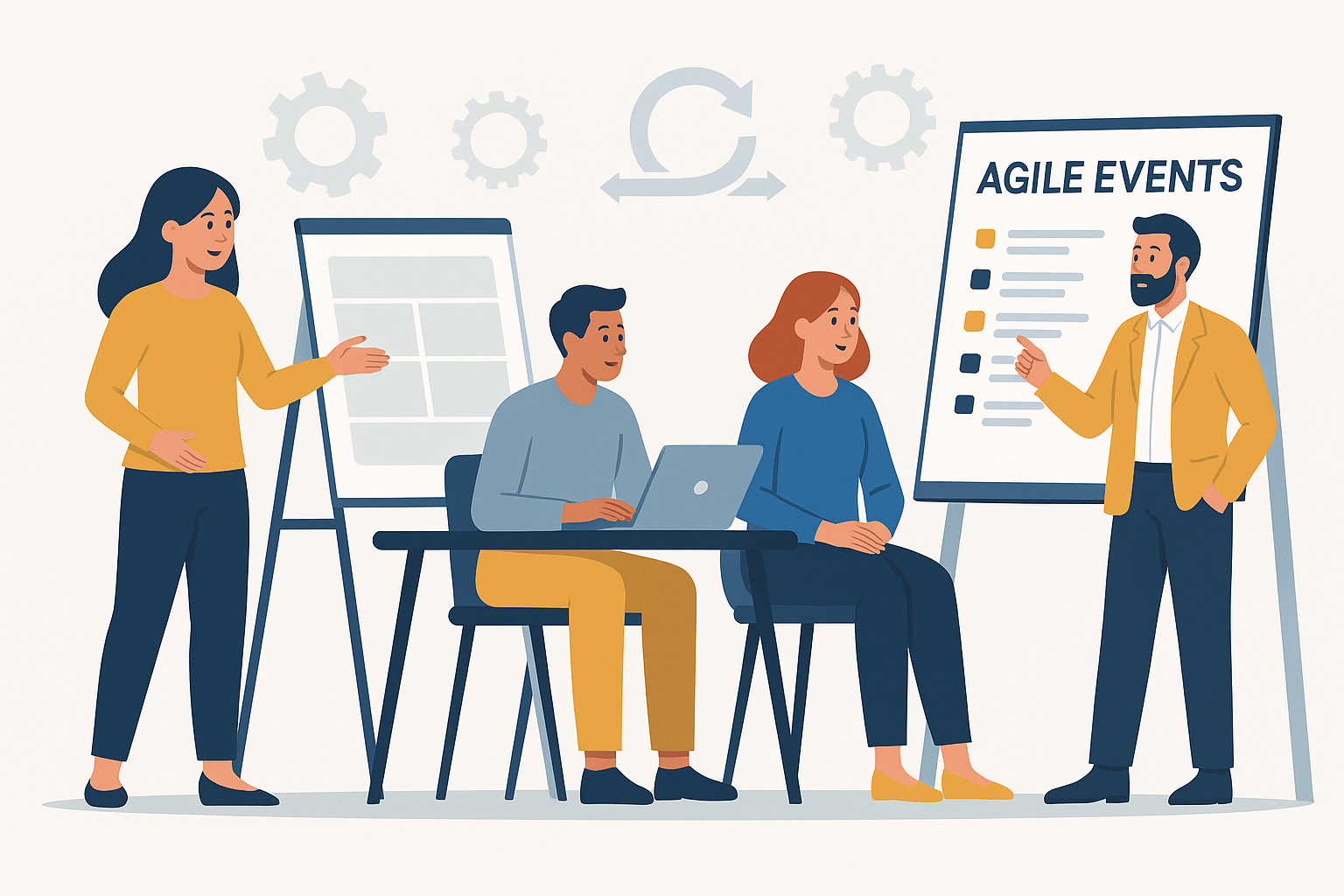
Agile is rooted in adaptability, iteration, and evolution. So it’s only fitting that our terminology evolves too. One such evolution gaining traction across Agile communities is the shift away from the term “Agile ceremonies” toward the more flexible and accurate term “Agile events.”
Why does this matter? Because the words we use can shape the expectations, behaviors, and even the effectiveness of our teams. And in Agile, language isn’t trivial—it’s transformational.
Why “Ceremonies” Feels Outdated
The word “ceremony” implies rigidity, ritual, and a kind of sacred obligation. It conjures images of formal proceedings that must happen without deviation. While Scrum ceremonies—Sprint Planning, Sprint Review, Sprint Retrospective, and Backlog Refinement—have structure and value, the word “ceremony” can feel out of step with modern Agile principles.
Many teams report that referring to these as “ceremonies” makes them feel mandatory, even when they may not add value for that particular timebox. This perception can unintentionally undermine autonomy and reduce psychological safety around adjusting practices to fit the team’s current context.
Agile Events: Embracing Intentional Flexibility
Switching to “Agile events” reframes these sessions as purposeful, not prescriptive. It acknowledges that these interactions exist to support collaboration, feedback, planning, and relentless improvement—but not at the expense of flexibility or relevance.
When we call them events, we reaffirm that Agile is adaptive, not dogmatic. We give teams the language—and the permission—to make these events work for them rather than against them.
Optional, Not Omitted: A Maturity Lens
There’s a misbelief that if Agile teams skip events, they’re “doing Agile wrong.” In truth, mature Agile teams may adapt the frequency, format, or even the necessity of certain events depending on their current phase, backlog state, or team cohesion.
For instance, a highly aligned and experienced team may choose to combine events, hold shorter versions, or even skip an iteration review if nothing new was delivered. This isn’t dysfunction—it’s contextual agility.
The key is that these decisions are made intentionally—with the whole team’s agreement and in service of flow, value, and outcomes.
Language Drives Culture and Change
Changing “ceremonies” to “events” may seem semantic, but it signals something deeper: an evolution in how we treat process. Agile is not a checklist; it’s a mindset. The shift reflects that we trust teams to adapt their practices and treat each interaction as a lever for learning and delivering value, not a box to be checked.
When we speak about our work in ways that invite openness, flexibility, and empowerment, we strengthen our Agile culture.
Let Bush Agility Help You Evolve with Confidence
At Bush Agility, we specialize in helping organizations evolve beyond rigid processes and embrace Agile with maturity and confidence. Whether you’re launching new teams or scaling across portfolios, we provide tailored SAFe-certified training, staff augmentation, and expert Agile coaching.
Want to help your teams move beyond prescriptive rituals and toward meaningful agility?
Let’s evolve together.