From Vision to Reality: Using KPIs to Track Progress in Agile Value Streams
Oct 19, 2025
Key Performance Indicators (KPIs) are more than just numbers—they are the vital signs of an enterprise’s Agile health.
KPIs reflect whether the enterprise is delivering on its promises and progressing toward meaningful, measurable outcomes. In the Scaled Agile Framework (SAFe), KPIs are central to translating strategic vision into executable reality across value streams and portfolios.
Yet in many organizations, metrics are collected but rarely connected. KPIs must do more than exist—they must serve. When used properly, they inform whether investments are yielding returns, whether value is being delivered, and where adjustments are needed.
Tying KPIs to Value Streams
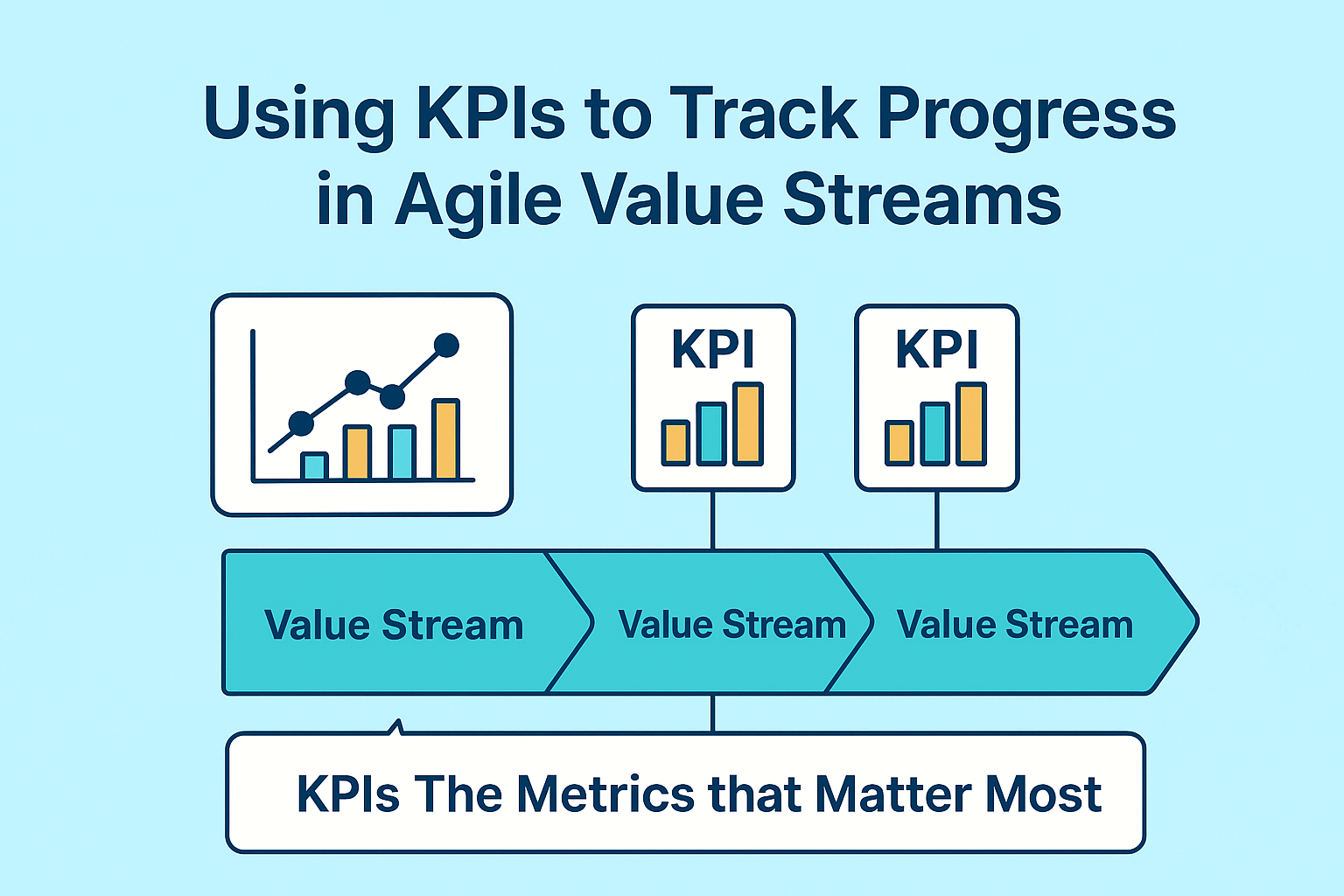
KPIs should be tied directly to the flow of value within each development value stream—not abstracted to vanity metrics.
SAFe’s emphasis on organizing around value means every Agile Release Train (ART) operates within a value stream that delivers solutions. When KPIs are aligned to these value streams, they become tools of insight and adaptation. These KPIs provide feedback loops that connect teams to impact.
Crucially, portfolio-level KPIs help leadership determine whether the organization is moving in the right direction. This is especially important when investment decisions are made through participatory budgeting—ensuring that what gets funded also gets measured.
KPI Feedback: The Engine of Improvement
KPIs aren’t static—they are evolving signals. Agile organizations use them to inspect and adapt continuously.
Every Planning Interval (PI) presents a feedback opportunity. KPIs should be reviewed not just quarterly—across ART syncs, system demos, and inspect-and-adapt events. That’s when KPIs become actionable.
For example, if a KPI indicates declining quality, leaders can pivot quickly to allocate capacity to improve Built-In Quality. If time-to-market KPIs are slipping, it may signal a need for architectural runway or DevOps investment.
Without these feedback loops, even the best-laid strategies become detached from execution. But with well-integrated KPIs, Agile becomes a learning system—where metrics drive meaningful change, not just dashboards.
Using KPIs to Drive Strategic Outcomes
SAFe enables organizations to align KPIs with Strategic Themes and Lean Portfolio Management practices.
This alignment ensures that every KPI ladder supports strategic objectives and guides decision-making across portfolios. KPIs bring clarity to the question: Are we delivering value?
When leaders at every level—from Scrum Masters to Epic Owners—are aware of the enterprise KPIs and how they map to their value streams, it creates transparency and shared accountability.
This creates a culture where metrics empower, rather than control. It fosters innovation without chaos, and alignment without rigidity.
Ready to Use KPIs for Meaningful Change?
KPIs aren’t about perfection—they’re about progress. And Bush Agility can help you measure what matters most.
At Bush Agility, we help organizations implement SAFe in a way that is both principled and practical. We provide expert-led training, coaching, and staff augmentation to build Lean Portfolio Management maturity, align KPIs to strategic outcomes, and foster a culture of learning.
Let us help you transform metrics into momentum.
👉 Contact Bush Agility today to explore how we can support your Agile transformation.
Interested in building your internal capabilities? Explore our full catalog of SAFe training to begin your learning journey: