Shared Services in SAFe: Unlocking Specialist Value for Agile Release Trains
Sep 1, 2025
Introduction
In large enterprises adopting the Scaled Agile Framework (SAFe), Agile Release Trains (ARTs) are the heartbeat of value delivery. These long-lived teams align multiple Agile teams to a shared vision and deliver solutions at scale. Yet, there’s a quiet force working behind the scenes that often determines whether ARTs succeed or stall: Shared Services.
Shared Services are specialists—security engineers, UX designers, compliance experts, data architects—who may not belong to a single ART but whose expertise is critical to delivering value safely and effectively. Understanding their role, integrating them into ART events, and managing their limited capacity are essential steps for enterprises seeking true business agility.
What Are Shared Services in SAFe?
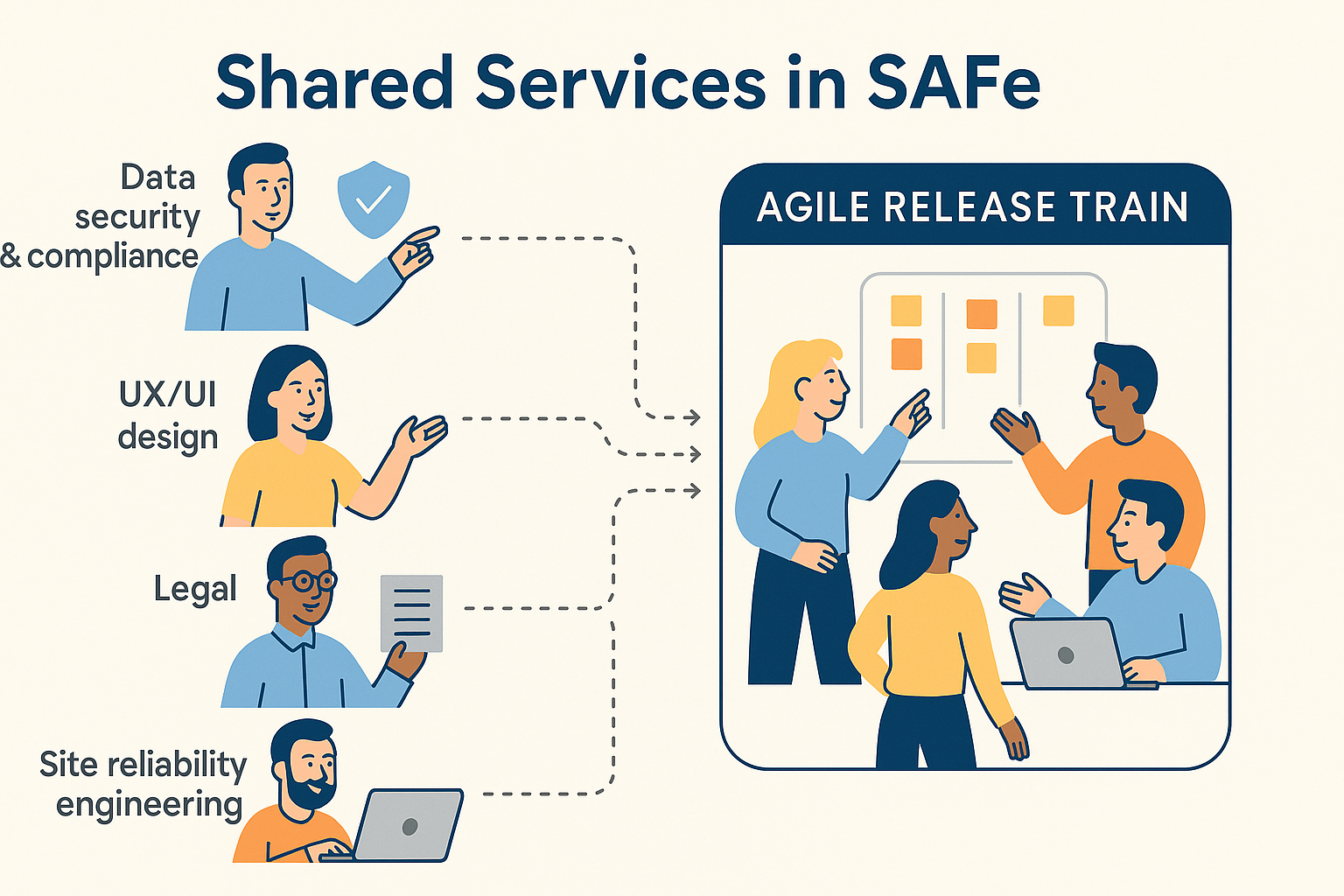
In SAFe, Shared Services are individuals or small groups who provide expertise not easily dedicated to one ART. These specialists often support multiple trains simultaneously. Examples include:
-
Data Security & Compliance Experts – Ensuring solutions meet regulatory requirements.
-
UX/UI Designers – Creating cohesive, user-centered experiences across multiple solutions.
-
Legal Specialists – Providing input on contracts, intellectual property, or industry compliance.
-
Site Reliability Engineers (SREs) – Assuring operational stability and scalability.
Unlike Agile team members who are fully dedicated to an ART, Shared Services float across trains, contributing specialized knowledge at critical moments.
Why Shared Services Matter to ART Success
ARTs are designed to be cross-functional and self-sufficient. But the reality of enterprise development is that specialized expertise is scarce. Rather than duplicating specialists across every train, SAFe encourages leveraging them as Shared Services.
Key benefits include:
-
High-Quality Deliverables: Specialists provide depth in areas such as compliance, architecture, and testing.
-
Risk Mitigation: Legal, security, and operational risks are addressed early, reducing costly rework.
-
Accelerated Value Delivery: By integrating specialist expertise into PI Planning and ART events, trains avoid bottlenecks later in the cycle.
When properly aligned, Shared Services remove friction and enable ARTs to deliver incremental value with confidence.
Challenges and Best Practices for Integrating Shared Services
While invaluable, Shared Services introduce coordination challenges:
1. Capacity Constraints – Specialists must balance competing priorities across multiple ARTs.
2. Visibility Gaps – Without clear communication, ART teams may not know when expertise is available.
3. Alignment to Cadence – Specialists must align with ART events like PI Planning, even if they’re not permanent members.
Best Practices:
-
Plan Early During PI Planning: Identify where specialist expertise is needed and schedule their involvement.
-
Visualize Capacity: Use Kanban boards or capacity plans to prevent overload.
-
Invite to Key Events: Ensure Shared Services attend PI Planning, System Demos, and ART Syncs as needed.
-
Create Communities of Practice (CoPs): Foster collaboration among specialists who share similar domains (e.g., UX CoP, Security CoP).
The Strategic Role of Shared Services in Business Agility
SAFe emphasizes business agility—responding to change with speed and innovation. Shared Services are critical to achieving this goal: they allow ARTs to pivot without sacrificing quality or compliance. By embedding specialists strategically, enterprises can innovate rapidly while staying aligned to regulatory and technical guardrails.
How Bush Agility Can Help
At Bush Agility, we help organizations integrate Shared Services effectively into SAFe implementations. Whether you’re launching your first ART or scaling across value streams, our SAFe-certified training and coaching provide practical strategies for aligning specialists with value delivery.
Ready to elevate your ART performance and unlock the full value of Shared Services?
Contact Bush Agility to explore tailored training and implementation support.