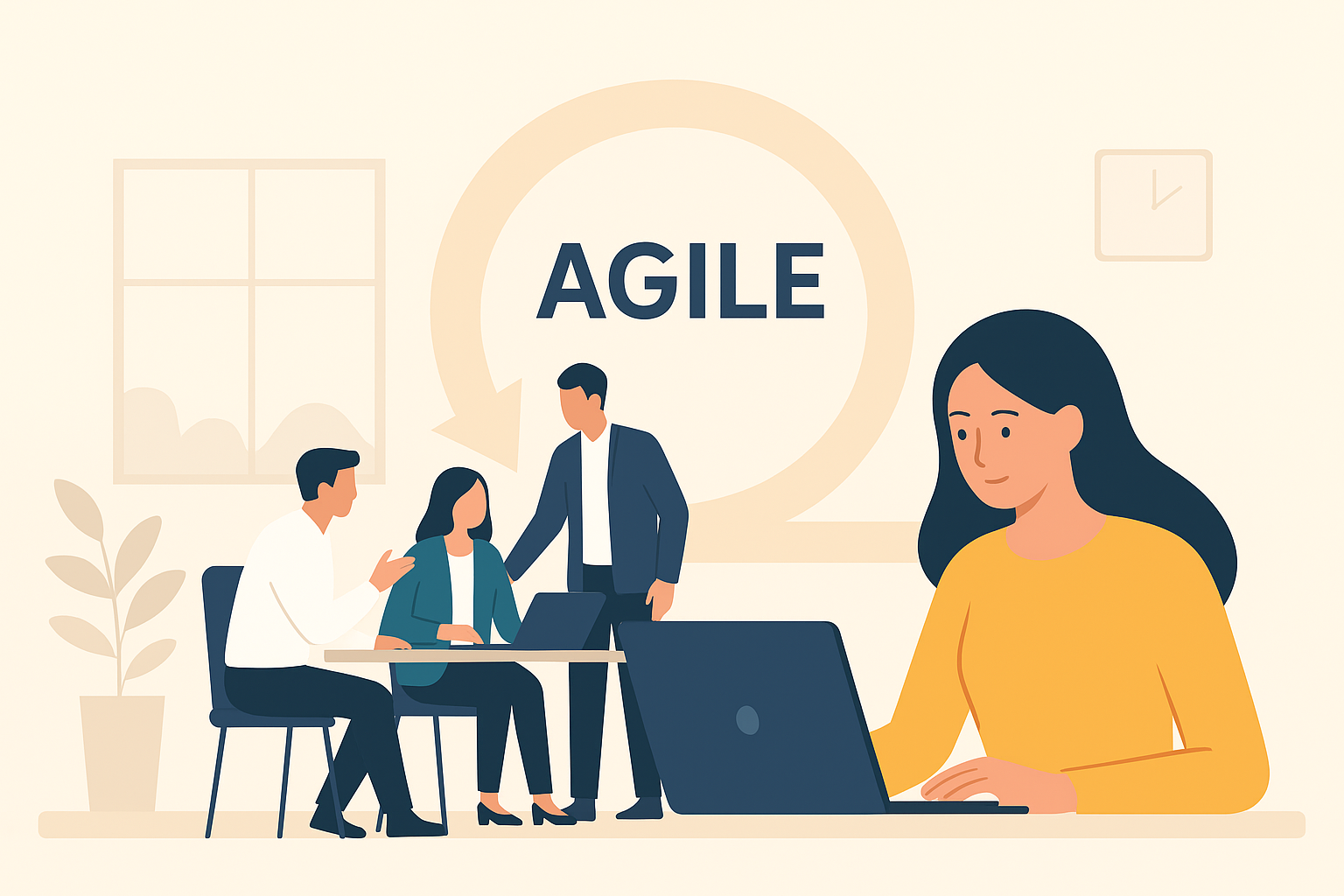
Stable Agile Teams, Predictable Outcomes: The Case for Long-Lived Agile Teams
Oct 22, 2025
Why Stability Is the New Velocity in SAFe
In the rush to launch the next Agile Release Train or pivot to a new product strategy, too many organizations forget a foundational principle: great Agile teams are built over time, not assembled overnight. Long-lived Agile teams are one of the most overlooked catalysts of predictability and value in SAFe and scaled Agile environments.
The Business Case for Long-Lived Agile Teams
Consistency Drives Capability
Agile teams take time to gel. Tuckman’s model—forming, storming, norming, performing—is not just theoretical. When we force teams to re-form regularly, we delay the “performing” stage that drives throughput and innovation.
Within a SAFe Agile Release Train (ART), long-lived teams cultivate high trust, deeper technical knowledge, and optimized flow. They minimize friction in PI Planning, synchronize more efficiently with stakeholders, and iterate on improvements that stick.
Predictability: A Hidden Asset
Stable Teams Enable Reliable Forecasts
When teams stay together across multiple PIs, velocity stabilizes. Forecasts become more accurate. Value delivery becomes predictable. Long-lived teams build a rhythm of continuous delivery that aligns with the cadence of the ART and supports the entire value stream.
This kind of reliability makes strategic planning easier. Portfolio-level commitments carry less risk, and customer satisfaction rises with dependable feature releases.
The Innovation Flywheel
Familiarity Fuels Innovation
Innovation doesn’t always come from disruption—it often comes from iteration. Teams that stay together learn to innovate within constraints. They refine processes, propose architectural improvements, and take ownership of their continuous delivery pipeline.
As their psychological safety grows, so does their creativity. They move from merely executing to proactively enhancing the value stream.
The Pitfalls of Breaking Up Agile Teams
Disruption Comes at a Cost
Reassigning team members may seem efficient on paper, but the cost is steep:
-
Loss of team cohesion and trust
-
Diminished velocity and unstable burn-down trends
-
Onboarding time for new contexts, tools, and teammates
-
Erosion of shared ownership and morale
Breaking up long-lived teams disrupts the very continuity that makes Agile at scale work. It undercuts the PI cadence and undermines Lean-Agile principles like built-in quality and relentless improvement.
How to Preserve and Empower Long-Lived Teams
Tips to Keep Your Agile Engine Running
1. Organize around value, not function. Teams need a mission tied to the value stream—not departmental boundaries.
2. Avoid resource-pooling. Dedicated team members build momentum. Partial allocation slows everything down.
3. Invest in team health. Use Inspect & Adapt to surface friction points and let the team drive improvements.
4. Celebrate team wins. Acknowledge how team stability contributes to business outcomes.
Final Thoughts: Stay Together to Go Far
The Agile Release Train Only Runs When the Teams Are Intact
SAFe is more than a framework—it’s a system that depends on alignment, autonomy, and team maturity. Long-lived teams are the glue that holds this system together. Break them up too often, and you break your delivery engine.
If you’re aiming for better business agility, don’t look for new talent. Invest in the teams you already have. Keep them together. Grow them. Empower them to own the journey—and the outcomes.
How Bush Agility Can Help
Support That Scales with You
Bush Agility helps organizations build and sustain high-performing Agile teams. Through SAFe-certified training, executive coaching, and experienced staff augmentation, we enable long-lived Agile teams that deliver real results.
To learn more about how we can help your teams thrive and scale with confidence, contact Bush Agility.
And if you’re ready to deepen your knowledge and support long-lived Agile teams in your organization, explore our SAFe-certified training options: Register now for Bush Agility’s SAFe training.