
Introduction
Prioritization is something every Agile team does naturally—whether we realize it or not. From the moment we plan a sprint, we weigh which user stories deliver the most value, reduce the most risk, or unblock the most dependencies. At the team level, this process feels intuitive. But as we scale Agile with SAFe and move from user stories to features (and even epics), prioritization becomes more complex—and more critical to delivering business value at speed.
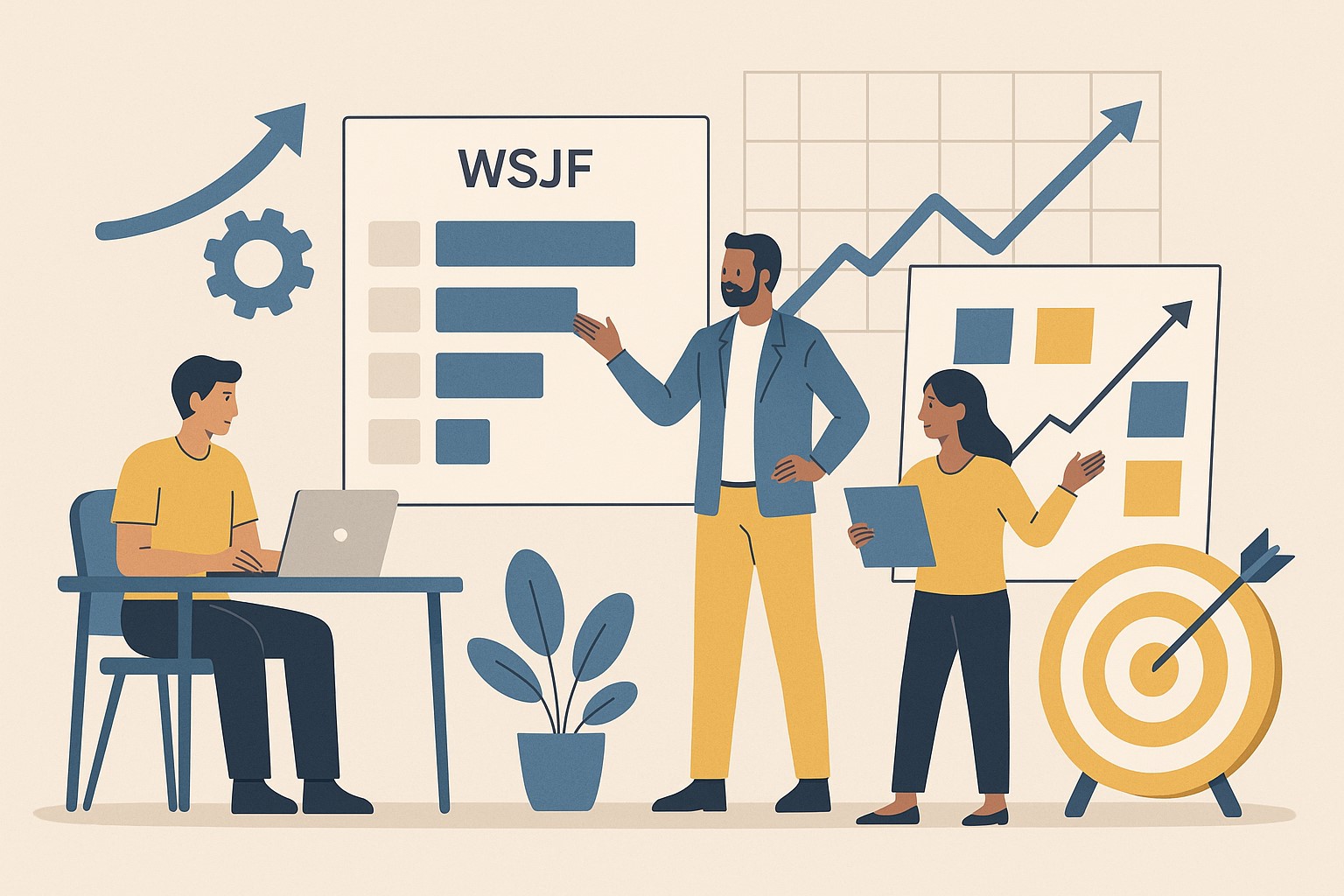
Enter Weighted Shortest Job First (WSJF). In its simplest form, WSJF is a way to identify which work will deliver the most value in the least amount of time. It’s not just math—it’s a Lean economic principle designed to ensure Agile Release Trains (ARTs) maximize return on investment and time-to-market.
What is WSJF in Simple Terms?
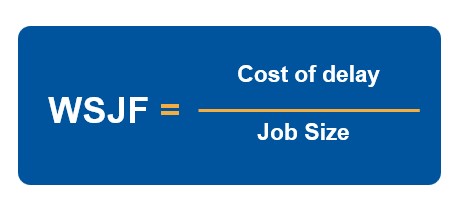
Think of WSJF as a ratio: Cost of Delay ÷ Job Size.
-
Cost of Delay (CoD) represents the impact of not doing the work now. This includes factors like business value, time criticality, and risk reduction or opportunity enablement.
-
Job Size is how much effort it takes to complete the work.
The higher the WSJF score, the more economically sensible it is to prioritize that feature. This calculation allows ARTs to rank features objectively, aligning stakeholders and teams around what matters most.
From Team-Level Prioritization to ART-Level Prioritization
Teams have always prioritized—user stories during sprint planning, backlog refinement, and daily standups. But when multiple Agile teams are synchronized in an ART, the stakes are higher:
-
We’re no longer prioritizing stories; we’re prioritizing features that span teams.
-
Decisions impact multiple dependencies and align with portfolio-level initiatives.
-
Misaligned prioritization can derail entire Program Increments (PIs).
SAFe leverages WSJF during PI Planning to ensure features in the ART Backlog are sequenced based on value delivery—not opinion or politics.
Why We Need to Think Outside the Box
While WSJF provides a disciplined, economic framework, it is not without limits:
-
Context matters – Business value is subjective and can shift rapidly.
-
Dependencies skew prioritization – A high WSJF feature may still block lower WSJF work.
-
Intangibles aren’t always captured – Brand impact, user delight, or strategic positioning may not fit neatly into a formula.
Thinking outside the box means augmenting WSJF with:
-
Real-time customer feedback loops
-
Scenario-based prioritization for emerging market shifts
-
Incorporating innovation enablers alongside direct business features
This hybrid approach preserves WSJF’s discipline while acknowledging the creative and strategic aspects of product management.
Lean Economics at Scale
SAFe’s principle of “take an economic view” drives WSJF’s use. Prioritizing work based on delay costs ensures every ART dollar and developer hour is applied where it matters most. At scale, this isn’t just about efficiency—it’s about survival. In competitive markets, the opportunity cost of delay compounds across dozens of features and releases.
Conclusion: Prioritization as a Continuous Practice